|
I bet there are as many people
playing 'Farmville' and 'Texas holdem' poker in
India as many there are playing Counter Strike
or maybe even more. This means that casual gaming
even after arriving around six months or a year
back has taken the country by storm.
|
|
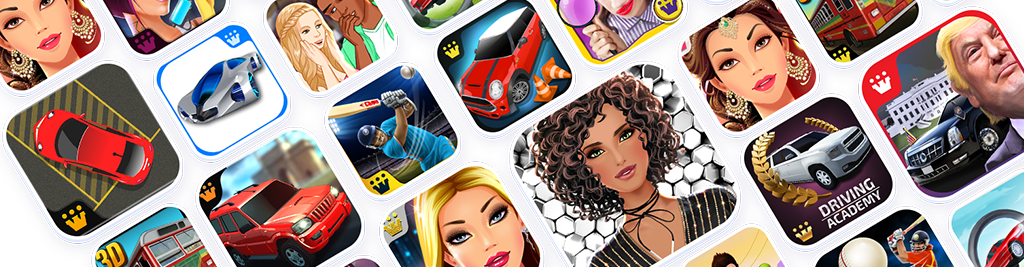
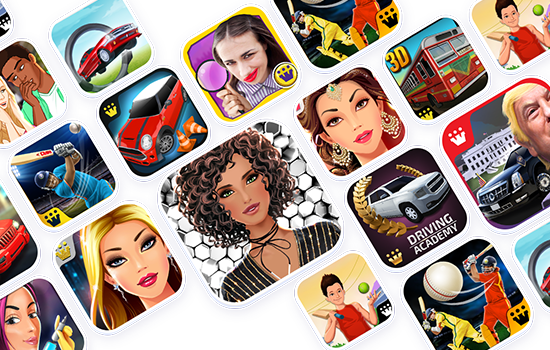
Established in 2006,
Games2win.com today has presence in 23 countries across
the globe and has a reach of 5 million unique users
every week. In an exclusive interview with GamingXpress'
Chaitra Shetty & Rohit Shirke, Games2win CEO Alok
Kejriwal shares his insights on the serious business
of casual games.
What's your view of
the market for casual games in India, in terms of size,
the number of users and the revenue potential?
I think overall
India has never been a gaming market so far, so we are
not talking about seeing structural changes or seasonal
shifts or long term changes happening. I mean there
was nothing to make any changes happen. The good news
is that gaming is beginning to catch up in this country
today. So if you quickly have a look at it historically
all that gaming has been so far is Counter-Strike. I
think there are around 5000 gaming cafe's in India,
so 5000 cyber cafes X 10 gives us around 50,000 gamers.
These are LAN café's or wi-fi café's.
You can't call a country of a billion in which 50,000
people playing Counter Strike a country of gamers.
What's happening in my
view just to answer your question is that the browser
is now in front of everybody's face, not just for an
hour a day but for 12 hours a day. The browser has to
come into the workplace as well as home, home because
of education and workplace because it is a tool to work.
The browser is the window to the world today and a lot
of people in India are experiencing their first bout
of gaming through casual games thanks to the browser.
So I would bet there are as many people playing 'Farmville'
and 'Texas holdem' poker in India as many there are
playing Counter Strike or maybe even more. This means
that casual gaming even after arriving around six months
or a year ago has taken the country by storm.
The second fundamental
in terms of revenue is, India has never been a market
that respects or pays premium for entertainment, you
pay for entertainment but you never pay premium. One
of the reasons is that, we release three movies a day.
So if there is a market where three movies get released
a day then you don't care, you can watch anything you
want anytime. Another reason is piracy, and I'll be
honest with you. Over a period of time I have started
saying that is it really piracy or what? No one really
knows because even that definition is blurring so if
no one is going to pay for original content and people
are going to enjoy shared content, I may rephrase IP
v/s piracy then what's the business model?
I am talking about share
ware here. If you are sharing, you are touching people.
If you are touching people then brands get interested
because brands want more and more people. They don't
really care how those people got contacted as long as
you contacted them. That's why a brand would put money
on a hoarding at a railway station or in a football
field or anywhere else because it touches people, so
if freeware or shareware is the model where games are
being played, brands are coming behind that. So my belief
is that brands and advertising in India is the nirvana
for gaming because brands have the pockets to sustain
the spending for consumers, the consumers like free
stuff and games is the golden thread that stitches these
two together. So consumers love games and brands love
consumers and that's the golden cycle.
What about Console
games?
I am very bearish because I think the console business
in India will die eventually, forget surviving but it
will die as the hardware is too expensive. Hardware
cost is alright to a certain extent but again I would
argue that parents in the same household would rather
get their child a P.C. A console on the other hand puts
gaming in the face of parents and that is what they
hate. Indian kids are policed by their parents till
they die. That's our culture and in our D.N.A so we
have got to love it and that's the beauty about India,
so they will listen to their parents and anything that
looks negative, anti studies or anti career or anti
social will be a strict NO NO. So the console essentially
belongs to the big American family room where the parents
are at work or divorced and the kids are lying with
the console, tummy upwards on their large carpet and
nobody cares what's going on. But in a cramped household
in an Indian city a console is a strict no, so that's
a very big reason.
The most important reason
being the expensive cost of development. Let's take
the example of the Moserbaer effect on content. Moserbaer
is saying, "Don't even think of buying a pirated
piece of junk, just buy the original good quality cheap
content". They are pricing their goods at such
low rates that if the same youth or teen is getting
a movie for approximately 80 bucks or 60 bucks with
which he is getting a whole lot of songs for free how
will he ever pay Rs.1500 for a cartridge for a game?
So you have to bring the price to his horizon, you cant
expect him to travel to America to buy it, and Rs.80
for a console game in India would work if there where
10 million bases sold which is also not there that is
why I am very bearish on the large format gaming market
which is P.C and console.
It's like brands and
games go together and brands want to touch the consumers,
don't you think that kind of adver gaming would work
for consoles if tried?
That's a great point and I am happy to clarify.
I never meant adver games. Adver games essentially are
very boring. Consumers don't like adver games beyond
a point. Consumers don't want to play with brands. I
meant games for the sake of gaming with ads in between
them to fund the free game so it's essentially a Games2win
model or a Zapak model. I didn't mean adver games. Adver
games are fine. Khatron Ka Khiladi is the format; it's
the content that matters. It could be sponsored by one
or two people. You can have a Hero Honda bike in it
but it cannot be about a brand. So that's what I meant.
Content that is free and consumer centric but funded
by a brand or ads supports gaming and not adver gaming.
|